
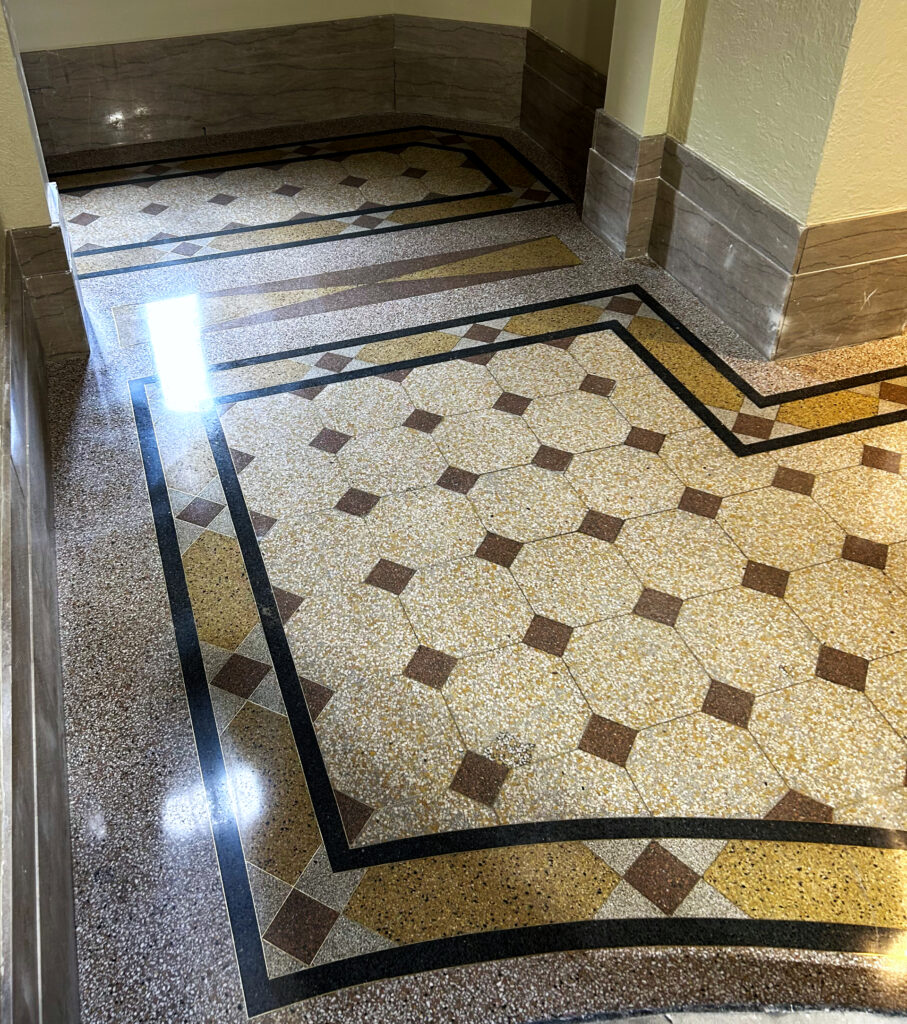
Whether you’re looking to refresh or repair terrazzo, or you’re just curious about the art form, one of the important questions when dealing with existing terrazzo is the matrix material. Is it cement terrazzo or resin-based? The craftsmen at DANCER have a passion for terrazzo as well as experience with the medium, so sometimes it’s as simple as taking a close look at the floor to determine the overlay material. Other times, it’s not as obvious at first glance, so here are some questions we ask to help determine the matrix material.
When was it installed?
Built in 1962 for the World’s Fair, the Seattle Space Needle was one of the first major epoxy-resin-based terrazzo projects, and it would still take some time for epoxy to become the standard in modern terrazzo. So, if your terrazzo installation predates the mid-1960s, it’s almost assuredly concrete terrazzo.
Are there divider strips?
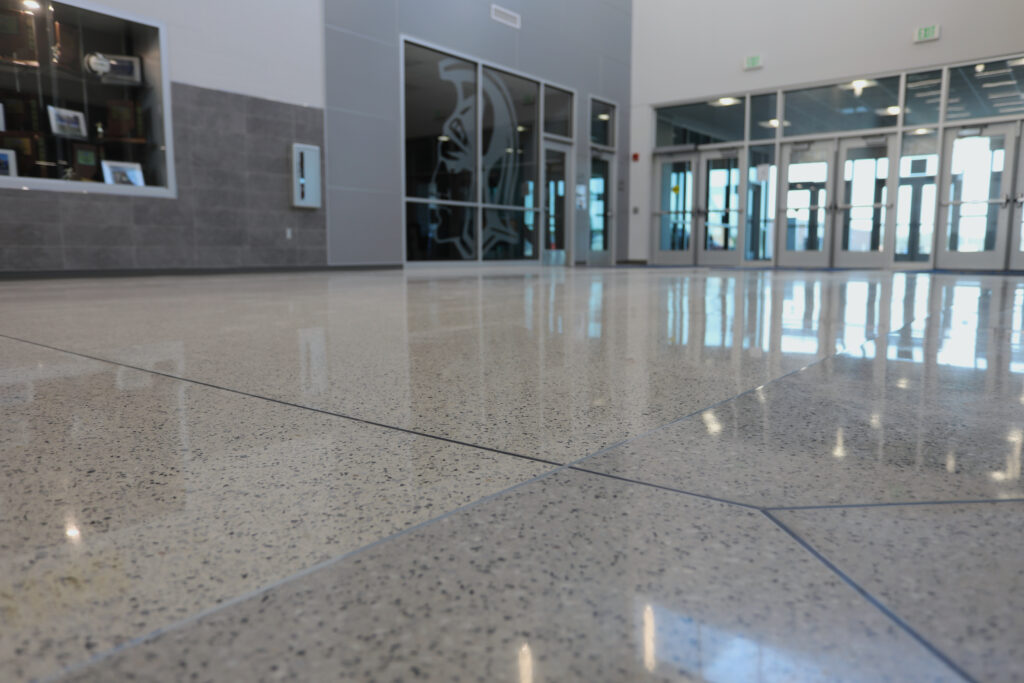
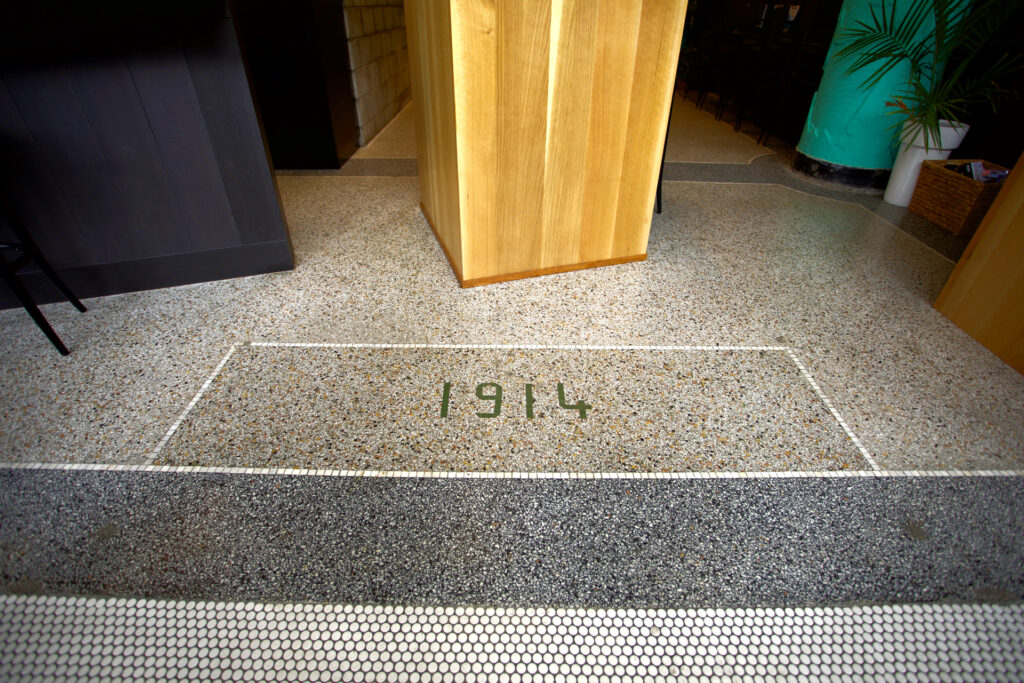
Divider strips are used to honor floor joints and separate different colors of terrazzo. Today, strips are made from zinc, aluminum, brass, and a variety of other materials. In early cement terrazzo, 1″ x 1″ ceramic tiles were used to keep colors separate and set termination edges where the terrazzo overlay ends.
How thick is the overlay?
Epoxy terrazzo can be confidently installed at a 3/8″ overlay. A concrete overlay requires a half-inch overlay or more, so knowing the distance between the top of your terrazzo and the substrate to which it’s bonded can be a solid indicator as to what material was used.
What Color is the Matrix?
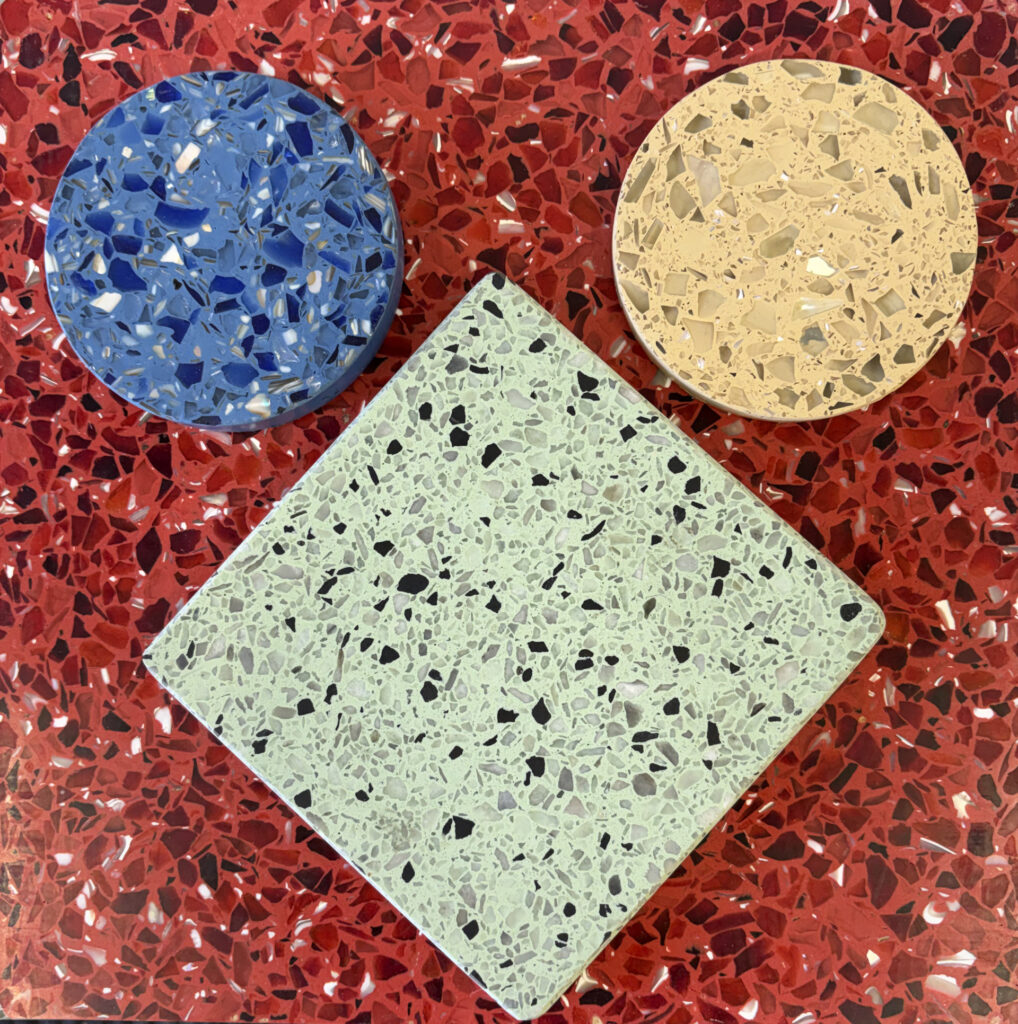
Cement terrazzo typically has a more muted matrix color. Cement needs pigment in order to take on color, and it can be difficult to get vibrant colors this way. Earth tones are typically the most vibrant colors in concrete terrazzo. Epoxy can be color-matched and made to exactly match any color that exists, including Pantones, RGB and CMYK formulas, and paint color samples.
Can you see the faint speckling of marble dust?
Marble dust is added to epoxy terrazzo to act as a binding and thickening agent. It’s possible to see the faint speckling it adds to the matrix upon close examination.
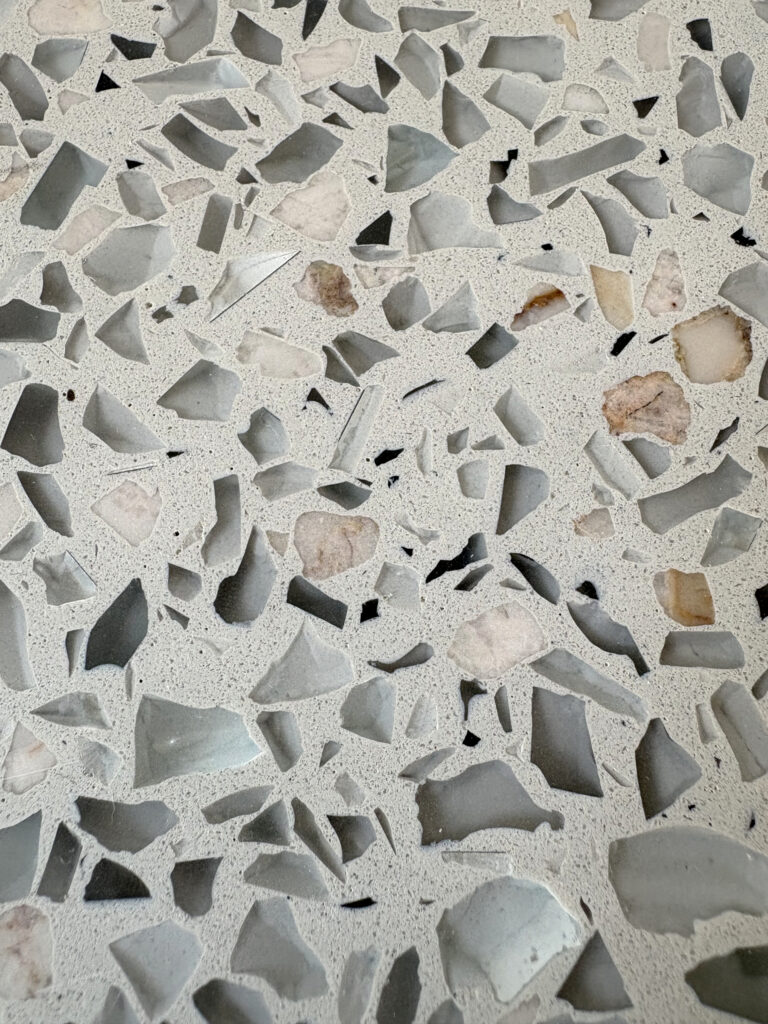
There are a variety of other ways that can help identify the terrazzo matrix. Try running your hand along the surface. Epoxy tends to have a smoother surface, whereas cement terrazzo can have a slightly grippy feel to it.
Look for pinholes. They should be nearly absent from epoxy terrazzo, as the resin grout coat will fill most or all of the small holes that develop as the matrix cures and air forces its way out. Cement terrazzo, on the other hand, tends to show more pinholes as the cement grout coat is not as exact as resin.
If you’re feeling particularly daring, acidic solutions will etch the surface of concrete terrazzo, but will not have any effect on epoxy resin.
The craft of terrazzo is one of our passions, so feel free to hit the contact button below if you have questions about new or existing terrazzo.